 Nordic Gradient
Computer vision for your idea, built for real conditions.
Software that lets a camera notice only what matters to you. Your phone says “package at the door”, and stays silent for a passing neighbor, a cat or falling snow.
What could computer vision do for you?
A few things it already does today.
- Pick the best 300 of 3,000 photosBlinks, blur and near-duplicates sorted away, from a wedding or a vacation.
- Know it's a carrotThe supermarket scale recognizes what is on it. No scrolling through a menu.
- Count the salmon swimming up the riverEach fish counted as it passes the fish ladder, day and night, with nobody watching the video.
Each of these is easy to show once. The work is getting it right at dusk, through a wet lens, and when half of it is hidden.
Works in real conditions
Models are tested on the hard cases, like glare, darkness, occlusion and the rare object, not only the average image.
The right method for the problem
State of the art where it pays off, proven methods where they are enough. Every choice is judged by accuracy and robustness on your data.
Results you can see
Every result comes with evaluations and visualizations that show where the model works and where it fails, so you can judge it before you rely on it.
Most work is computer vision. Other machine learning problems, such as using neural networks to optimize a process, are welcome too.
How it works
Your idea
Tell me about it, however rough. I'll say honestly whether computer vision is the right tool, and how I would approach it.
First prototype
Can it work? A small prototype on your data answers that. It is a separate, smaller contract, so you decide whether to continue after seeing the results.
What breaks it?
Metrics, visualizations and stress tests that show where it fails. I fix what matters within your real operating conditions.
Launch it
A deployed, documented system robust enough for your team to own. No lock-in, and further features only if you want them.
Nordic Gradient takes on a small number of part-time assignments, from focused tasks of a few weeks to slower projects that run over months.
Projects and articles
Own projects and open-source work. Each one shows where the model works, and where it fails.
Project
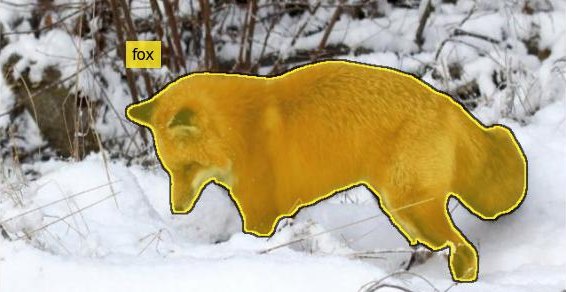
Nordic wildlife detection
The smallest YOLO model, fine-tuned to detect a few Nordic animals on a Raspberry Pi camera. How a convincing test score hid that it would call every animal on my own camera a dog, and what solved it.
Project
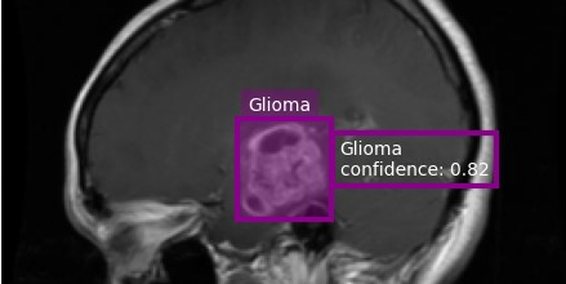
MRI tumor detection
An object detector written from scratch to find brain tumors in MRI, and measured against Ultralytics YOLOv5. Its earlier scores were too good, because four in ten test images had a near-twin among the training images. On a clean split and with three bugs fixed, both models reach an F1 score of 0.83.
Article
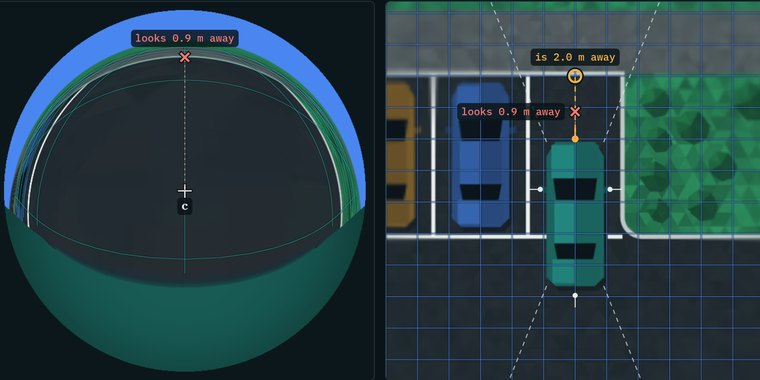
Distance through the lens of a fisheye
With fisheye cameras, a parking car sees much more of the ground around it than with ordinary ones. The catch is that the curb looks much closer than it is. With an interactive figure and some math, we trace each pixel back to the curb's true distance, even at the edges of the view, where OpenCV's one-liner gives up.
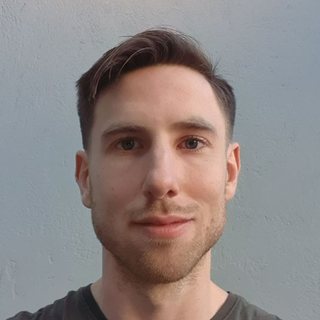
Nordic Gradient is run by me, John Dahlberg, a computer vision engineer in Stockholm. My previous work includes self-driving trucks, where it has to work in any weather, and brain radiosurgery planning, where precision is not optional.
More about me →Have an idea for what a camera could do?
Describe it, and I'll tell you honestly whether computer vision is the right tool.
Describe your idea